History of Monsters. 83
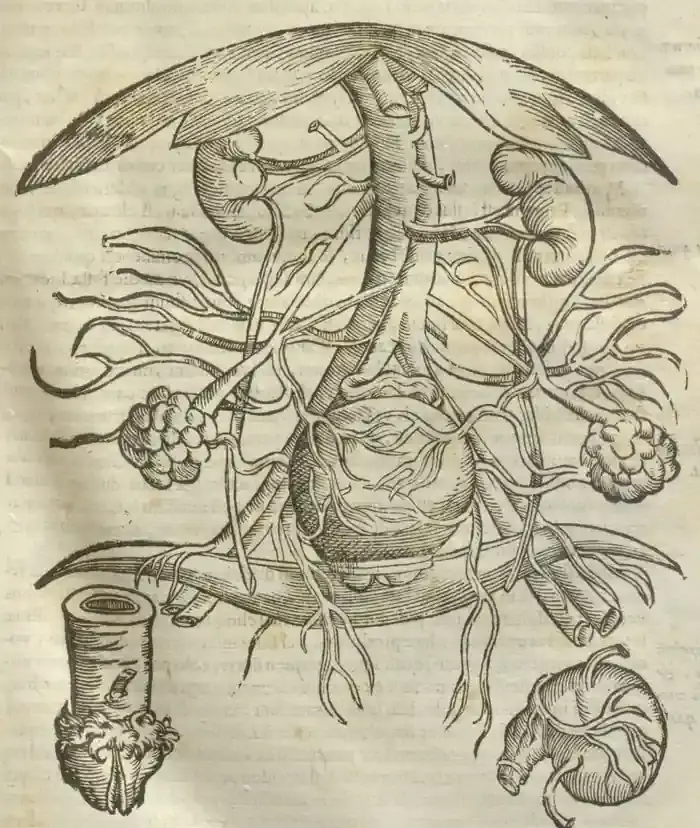
the uterus, positioned between the rectum and the bladder, is made up of both simple and complex parts. The simple parts include membranes, veins, arteries, nerves, and ligaments. Indeed, the womb receives nerves from the lower back and the sacrum, into which certain small branches of the "sixth pair" of nerves are inserted; this explains the profound connection between the uterus and the stomach, the brain, and other upper regions of the body.
It is worth noting here that the human uterus is very rarely found to be "two-horned" (bicornuate), unlike the wombs of lower animals. Furthermore, its internal cavity is not divided into separate chambers or "cells," as many have wrongly believed. Since the internal organs of women and men are essentially the same except for the parts dedicated to reproduction, I have provided an illustration showing the womb's external opening, the attached ureter passages, and its overall structure.
In the following figure, we show the same uterus with the vaginal canal cut away to reveal the internal cervix—the hidden opening where the fetus is formed and where the seed is enclosed until the appointed time of birth. In this same image, one can observe the bladder severed at its neck. I will not attempt a more detailed explanation of these features here, as they are demonstrated extensively throughout the established works of anatomists.
The uterus, showing the internal orifice.