of peacocks' brains, flamingos' tongues, and lamprey milt. Most humans, however, feed on beef, pork, mutton, and goat, and occasionally on hare, venison, marmot, squirrel, roe deer, dormouse, sheep, goat, hedgehog, rabbit, beaver, otter, badger, turtle, and frog—even the trunk and lips of an elephant. Indians eat the haunches of tigers, while certain peoples of Ethiopia are said to feed on the flesh of panthers and lions. In Africa, green lizards and monkeys are served at elegant banquets. The Prussians, a Scythian people of old, were once called "Hippophagi" because they ate horse meat. In the Insubria region of Italy, they eat wolves, cats, foxes, leopards, and donkey foals. Indeed, according to Galen, the meat of old donkeys and camels was once even considered a delicacy. According to Pliny, the Nomads live on the milk of dog-headed creatures, and the inhabitants of the West Indies eat snakes, vipers, and toads.
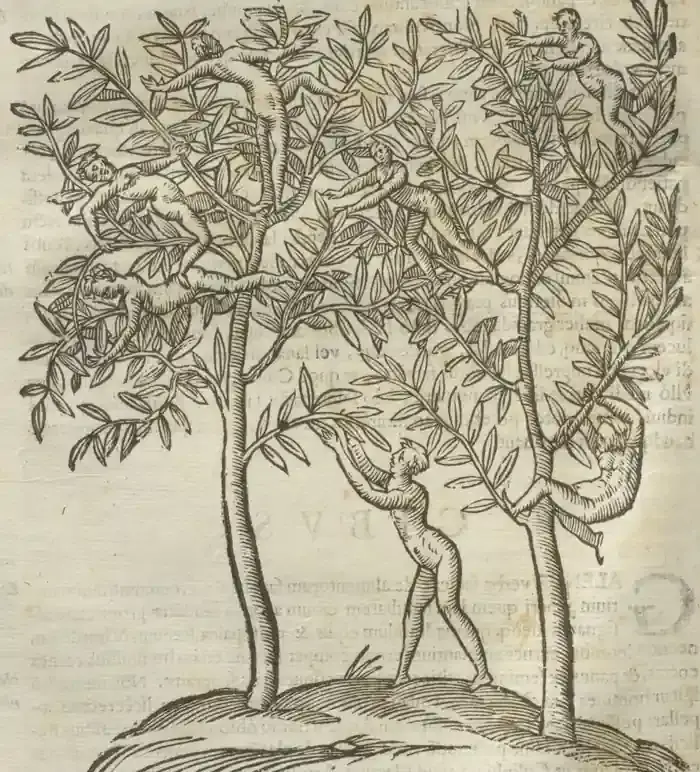
Furthermore, humans derive nourishment from everything that grows from the earth, especially vegetables; consequently, in times of high food prices, only herbs are brought to the table. On this subject, the historian Bugati reports that in the year 1233, the inhabitants of the Paduan countryside, driven by an extreme lack of food, lived like beasts on the grass growing in the fields. However, we should not be surprised by this, since peo-
Fruit-eating peoples.