134 Ulysses Aldrovandi
the other terms are those most applicable to man, such as *androdes* (manly), *anthroprepes* and *anthropoprepes* (befitting a human), *andreios* (relating to a man), *androphilos* (loving men), and *andrirasoria*—found in Aristophanes—meaning a woman who is fond of men. There is also *androboulos* (possessing a manly counsel) and *androlemma* (endowed with a manly elevation of spirit, as Hesychius explains). *Anthropothymos* signifies having a human soul, while in Homer, *anthropeios* and *androeios* simply mean human. *Anthropismos* refers to humanity, and *anthropoeides* describes that which closely approaches human nature. Indeed, according to John of Damascus, Christ was called *anthropopathos*, and the Greek theologians use the verb *anthropizomai* to mean "to become man."
Xenophon uses the word *andromekes* for one of manly stature, while Athenaeus uses *anthropoeides* for one distinguished by a human appearance, and *andreikelos* for one resembling a man. Likewise, *anthropizo* means to imitate men, and *synanthropo* means to live among men. *Hyperanthropos* refers to someone who exceeds human stature. Meanwhile, *anthropoglossos* is one who speaks with a human tongue, and *anthropologos*, according to Aristotle, is a person who enjoys talking about people. In Aristophanes, we find *andragathia*—literally a "man's good work"—translated as bravery or vigor, much like *andreia*, a word signifying virility, vigor, and the prime of manhood. From this comes *andrizo*, to act manfully; *andrizomai*, to reach adulthood; and *andropais*, a boy who performs manly deeds or is hastening toward manhood.
Some terms refer to parts of the human body, such as *anthropee* (or the contracted *anthrope*), implying *dora*, or human skin; similarly, *androproron* is used by Sophocles in place of *anthropoproswpon* to mean a human face. According to Hesychius, *androbathes* or *androsathon* refers to a well-endowed man—that is, one with larger than normal genitals. The term *androgynos* (or *androgynos*) is explained as a "male-female," a person possessing both sexes. However, Pollux uses this word to denote a eunuch, and in Hesychius, the same term designates the weak, the effeminate, and those with a womanly spirit; indeed, in the Proverbs of Solomon, it is used to describe the slothful. Finally, *andrapodon* literally means "man-foot," though the word is often used for a slave, since slaves are sometimes called the "feet" of their masters; Suidas uses *andrapodokapelos* to mean a slave-trader.
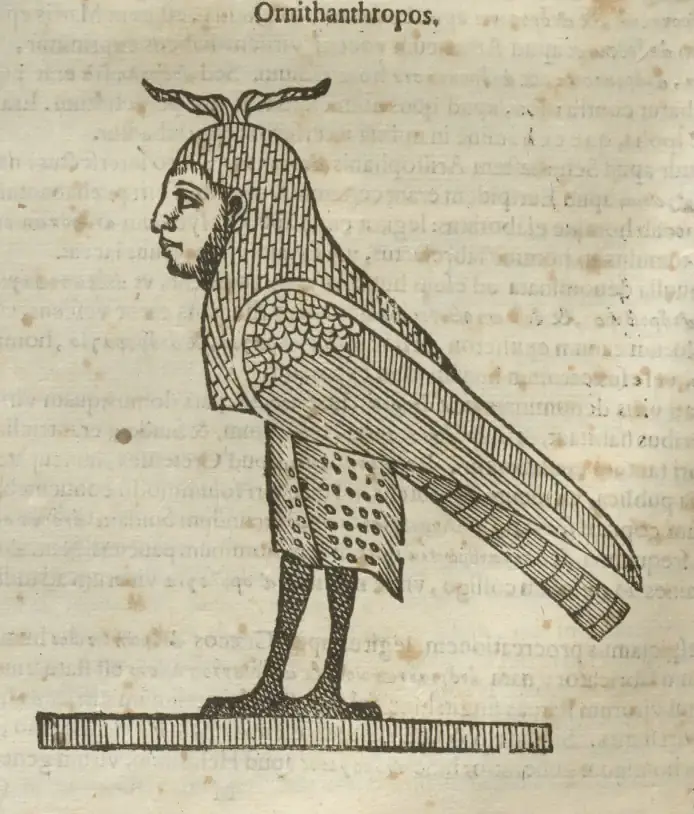
*The Bird-Man (Ornithanthropos)*